



Many people believe that only those who have continuously worked in engineering can apply for engineering migration. Once they change careers, they assume they are no longer eligible for skilled migration.However, this client’s successful case breaks that misconception.
Client Background
- 211 university bachelor’s degree: Environmental Engineering
- Age: 29
- Occupation after graduation: Primary school teacher
- Engineering industry experience: None
After graduation, she chose a stable teaching career and worked as a teacher for several years. Although the job was stable, both career development and income growth were limited, so she began considering her long-term future and migration possibilities.During the consultation, her biggest concern was: Having changed careers for many years, can I still pursue engineering migration?The answer is: A: Yes, you can.
Key Breakthrough: EA Skills Assessment
The pathway we designed for her was:
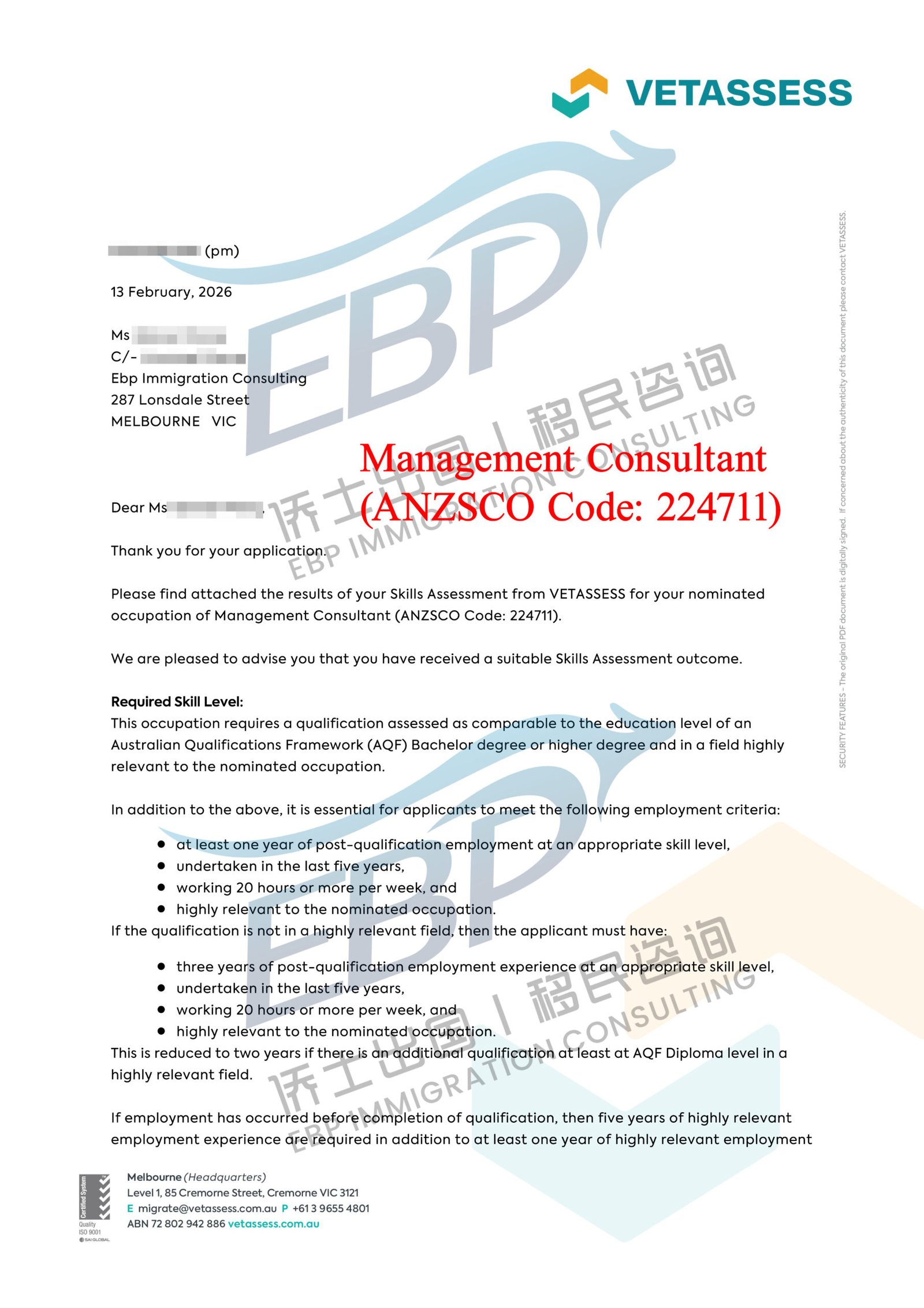
Obtain a skills assessment through Engineers Australia (EA),Assessment occupation: Environmental engineering–related field,No engineering work experience required,Eligible based solely on an engineering bachelor’s degree
Many people do not realize that for applicants with recognized engineering qualifications (most Tier-1 universities in China and most Australian universities are accredited), EA does not require relevant work experience. If the qualification is not accredited, applicants can still be assessed through a CDR (Competency Demonstration Report).
This indicates that:
Even if you have not worked in the engineering field after graduation, you can still pursue a skilled migration pathway as long as you have an engineering background.
How We Helped Her Pass the Assessment
After years away from engineering, the client lacked confidence in describing technical projects and professional experience.
We assisted her by:
Mapping undergraduate coursework to engineering competencies,Deeply extracting course design projects and graduation project experience,Ensuring all content met engineering competency and occupational standards
She ultimately passed the EA skills assessment successfully.
Subsequent Migration Pathways
After completing the EA assessment, she became eligible to enter skilled migration channels:
189189 Skilled Independent Visa
190 State Nomination Visa,491 Regional State Nomination Visa
Engineering occupations have long remained on shortage lists, offering stronger competitiveness and stability compared with many business-related pathways.
Why This Case Is Worth Attention
Engineering degree ≠ Must work in engineering,Career change for years still allows engineering migration,EA assessment does not mandate work experience,Female applicants are equally competitive,Provides new possibilities for career-transition applicants
Who Is Suitable for This Pathway?
If you meet the following conditions:
Bachelor’s or master’s degree in an engineering field, Did not work in engineering after graduation,Wish to obtain long-term residency through skilled migration,Prefer a more stable and competitive skills assessment pathway,
Then this pathway is worth serious consideration.