




A crucial adjustment has been made to Australia's 407 Training Visa just yesterday.While the change may seem like a procedural update, it completely blocks the path for many people who intend to "lodge a 407 Visa application first to maintain their immigration status and stay in Australia on a Bridging Visa".
I. What Exactly Did the Authorities Change?
Australia's Department of Home Affairs has officially announced:
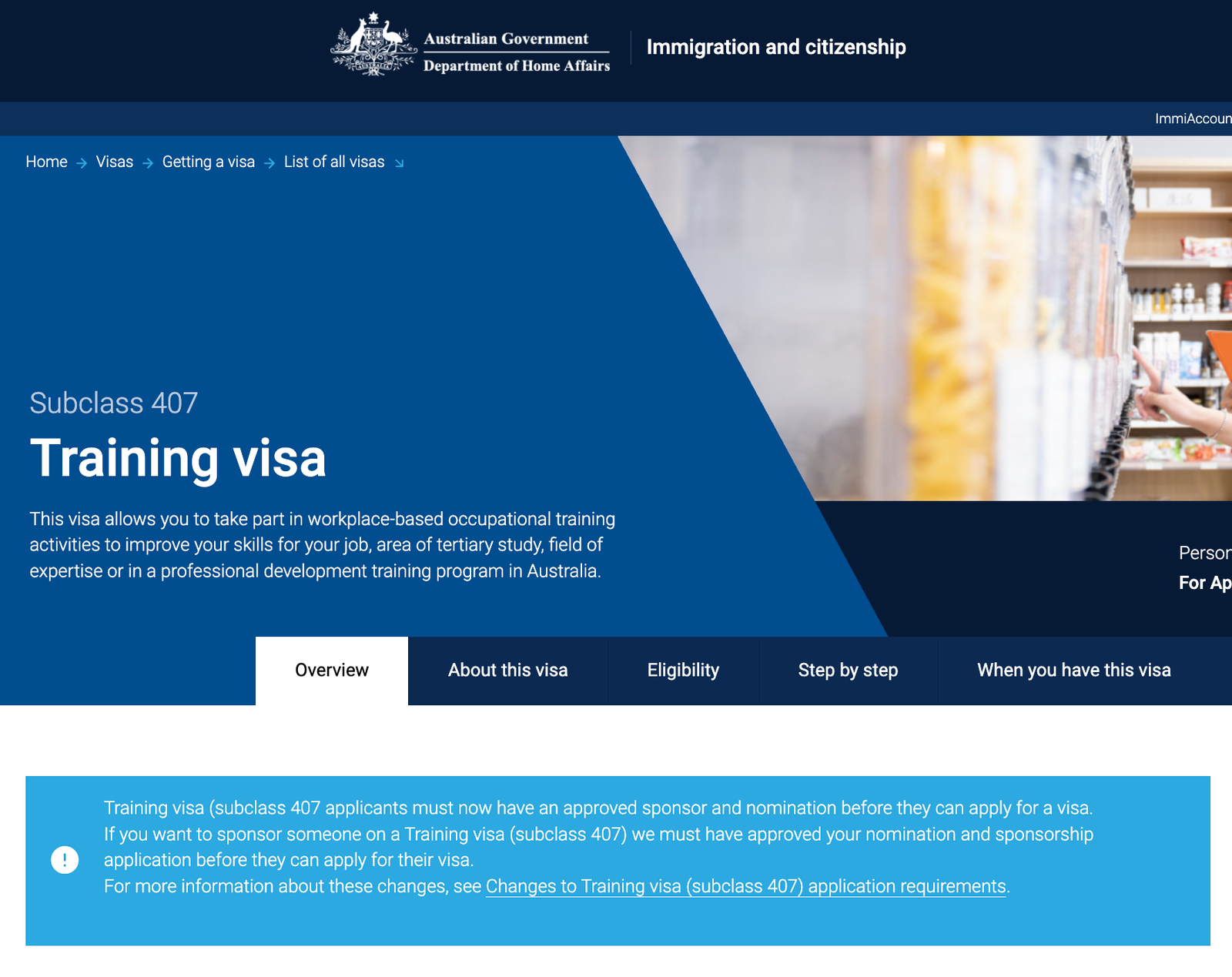
From 11 March 2026, in addition to the existing validity requirements, all new 407 Visa applications must meet an extra condition – the relevant sponsor and Training Nominator applications must have already been approved at the time of lodging the 407 Visa application.
This point is of vital importance.
In the past, many applicants would lodge the sponsor application, nomination application and 407 Visa application together for a 407 Visa, aiming to secure a Bridging Visa as soon as possible.But the official stance is now crystal clear:
If the sponsor application and nomination application are still unapproved, your 407 Visa application cannot be lodged.
II. Why Is This Said to Effectively Block the "Using a 407 Visa to Secure a Bridging Visa for Time Extension" Tactic?
Because a Bridging Visa A is typically granted on the premise that you have lodged a valid substantive visa application while in Australia.If a 407 Visa application is not deemed valid due to unapproved sponsor or nomination applications, it will naturally be difficult to trigger the subsequent bridging visa process. Going forward, it will no longer be possible to lodge a 407 Visa application prematurely with incomplete documents, hoping to secure a Bridging Visa to buy time as was done in the past.
In other words, the approach adopted by some applicants in the past was as follows:
- First, find a 407 Visa solution and lodge the sponsor, nomination and visa applications together
- Secure immigration status bridging as long as the application is successfully lodged
- Wait for the outcomes at a later stage
But this adjustment clearly shows that the authorities no longer want the 407 Visa to continue serving as a "buffer for immigration status".
III. Which Group of People Is This Adjustment Really Targeting?
In fact, the adjustment has the greatest impact not on applicants with complete eligibility, genuine employers and solid training plans.The groups truly hit by the change are usually the following:
Applicants whose visas are about to expire and who seek a 407 Visa at the last minute to "maintain their immigration status"
This is especially true for those who only start looking for a 407 Visa solution shortly before the expiration of their student visa, visitor visa or 485 Visa.In the past, some of these applicants would take a gamble and "lodge the application first regardless", but now with the requirement for prior approval of sponsor and nomination applications, such last-minute manoeuvres will become far more difficult in terms of timing.
People who intend to use the 407 Visa as a "tool to buy time"
This is actually the core target of the policy adjustment.In the past, some people used the 407 Visa not for the training itself, but as a technical pathway to continue staying in Australia. Now, the room for such practices has been significantly reduced. This conclusion is a reasonable inference based on the new rules that raise the threshold for a "valid application".
IV. Why Is This Considered a Substantive Tightening Rather Than a Minor Change?
Because it modifies not the assessment criteria, but the application lodging threshold.
Even if assessment criteria are tightened, you can still lodge the application first and then wait for the visa officer's review.However, this adjustment moves the front-end lodging threshold for the 407 Visa forward:
The sponsor application must be approved first, followed by the nomination application – only then will you be eligible to lodge a valid 407 Visa application.
This will directly lead to several consequences:
First, last-minute preparations will become much harder.Most cases that previously relied on "timing gaps" for manoeuvre will basically be impossible to execute from now on.
Second, higher requirements will be placed on the genuine preparedness of both employers and applicants.It is no longer a matter of lodging the application immediately when you decide to do so; instead, you must first complete the entire chain of sponsorship and nomination procedures.
Third, the 407 Visa will return more to its original purpose: a training visa, not a visa for immigration status transition.As clearly stated on the official 407 Visa webpage, this visa is designed for applicants to participate in workplace-based occupational training to enhance their professional skills, registration qualifications or competencies related to overseas academic qualifications.
V. Does This Mean That the 407 Visa Can No Longer Be Applied for Onshore at All?
This is not the case.
Based on the official information available so far, there has been no announcement that "onshore applications for the 407 Visa are prohibited entirely".The real change is:
From 11 March 2026, to lodge a 407 Visa application, the relevant sponsor and nomination applications must have been approved in advance; otherwise, the application will be deemed invalid.
Therefore, the onshore application pathway is not completely closed.Instead, it has changed to:
Your eligibility to lodge the application no longer depends on your willingness to do so early, but on whether the preceding sponsor and nomination procedures have been fully completed.
It is essential to distinguish between these two concepts.
VII. What Policy Signal Does This Round of Adjustment Send?
In my judgment, the signal is clear:
Australia does not want the 407 Visa to continue being used by the market as a "tool to extend stay", but instead intends to restore it to its original role as a training visa.
Going forward, the assessment of 407 Visa applications will place increasing emphasis on the following aspects:
- The genuineness of the employer
- The authenticity of the training program
- The maturity of the nomination
- The compliance of the application pathway
- Whether the applicant is applying for the genuine purpose of training, rather than merely to continue staying in Australia
This section is an analytical summary of the policy direction, based on the basic facts of the Department of Home Affairs' adjustment to the validity requirements for 407 Visa applications.
The 407 Visa is not no longer available for application.
Rather: Going forward, the preceding sponsor and nomination procedures must be properly completed for a 407 Visa application to be valid. For those who only intend to use it to buy time, this path is no longer viable.