




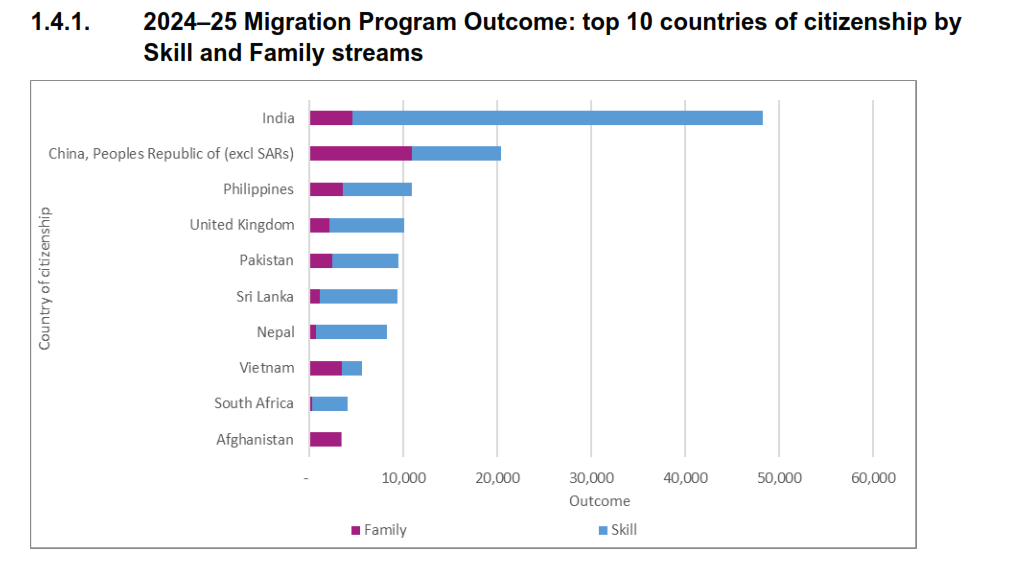
Australia’s 2024–25 Migration Program Report has finally been released. In previous years, the report was usually published around October, but this year it was delayed until late December. Although released later than usual, the data itself remains highly informative.This report only covers visa categories subject to program caps and does not include visas such as 191 / 888 / 801 / 100, among others. Below are the key takeaways.
- I. Skilled Migration: India Dominates, China Leads in Family Migration
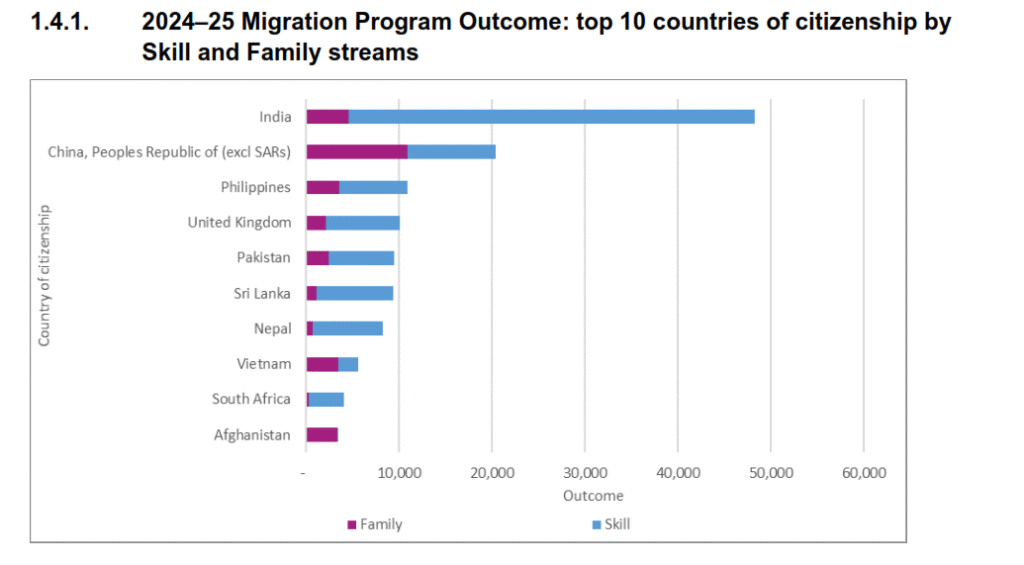
- Skilled migration – primary applicants:
- 🇮🇳 印度 超 4.3 万,逐年增长
- 🇨🇳 中国位居第二,但人数不到印度的 1/4
- Family migration:
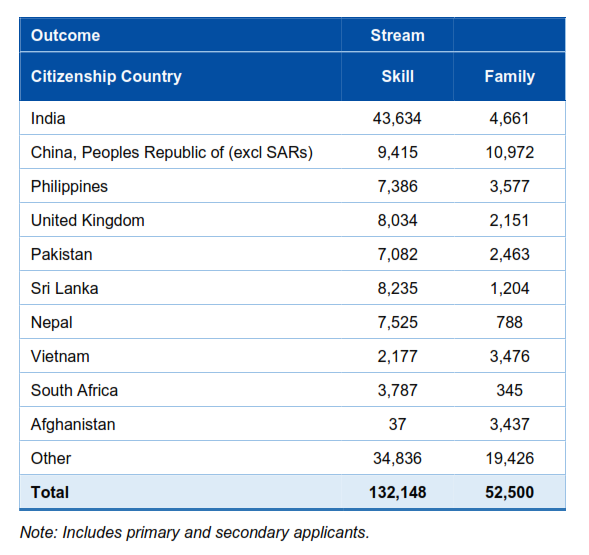
- 🇨🇳 中国大陆 家庭移民主申请人数首次超过技术移民
- This has never occurred in previous years.
- Applicants from other countries continue to show a pattern of skilled migration far exceeding family migration.
This clearly indicates a significant structural shift among Chinese applicants.
II. Top Occupations Granted Visas Across Five Skilled Pathways (Primary Applicants Only)
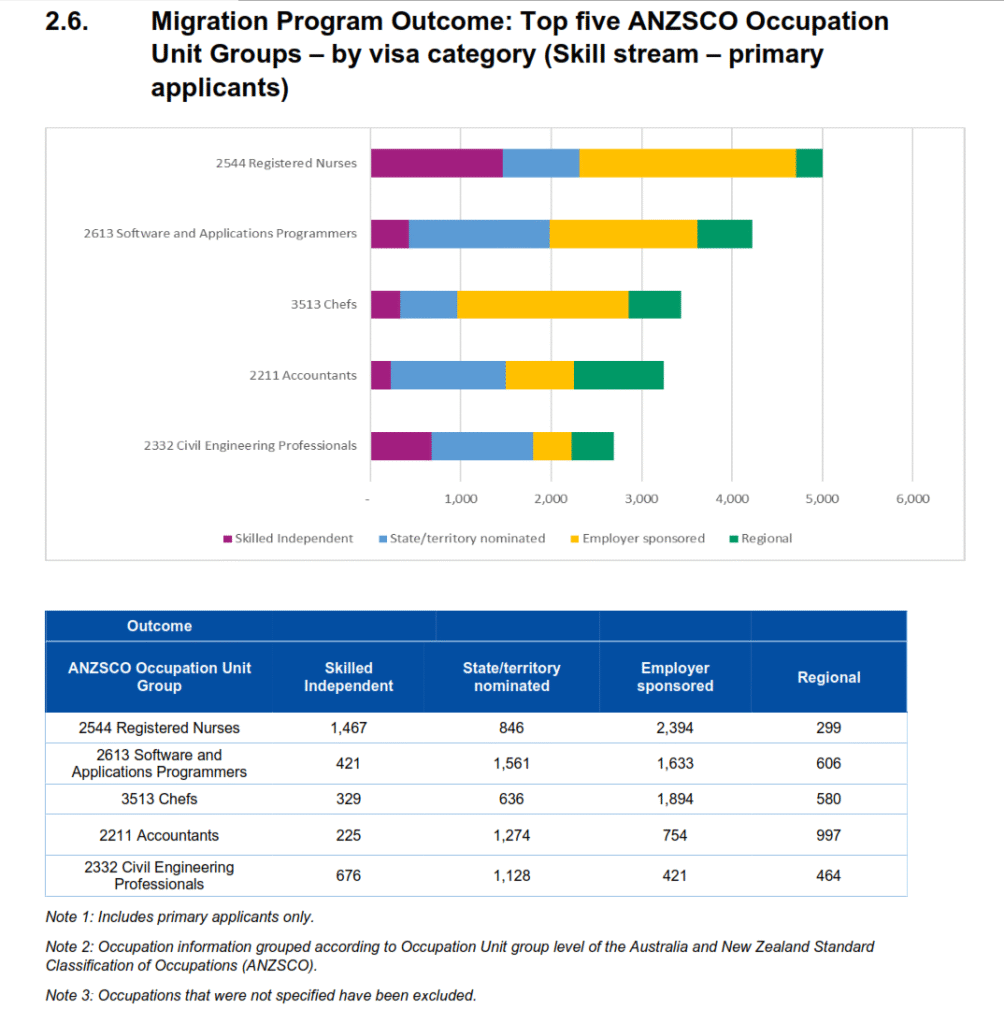
Scope: 189 + 190 + 186 + 491 + 494 Top five occupation groups by number of primary applicants granted visas:
2544 – Nursing:
- Over 5,000
- The highest number of grants came from subclass 186 employer sponsorship
2613 – IT:
- Approximately 4,200
- Subclass 190 and 186 numbers were largely comparable
3513 – Engineering:
- Approximately 3,500
- The majority were granted under subclass 186
2211 – Early Childhood Education:
- Total 3,250
- Primarily state-nominated
2332 – Civil Engineering:
- Nearly 2,700
- Also mainly state-nominated
When looking only at primary applicants in priority occupations, nursing and early childhood education remain the absolute core pillars.
III. Ministerial Direction 105: Priority Occupations Remain Clear
Under Ministerial Direction 105 (primary applicants only):
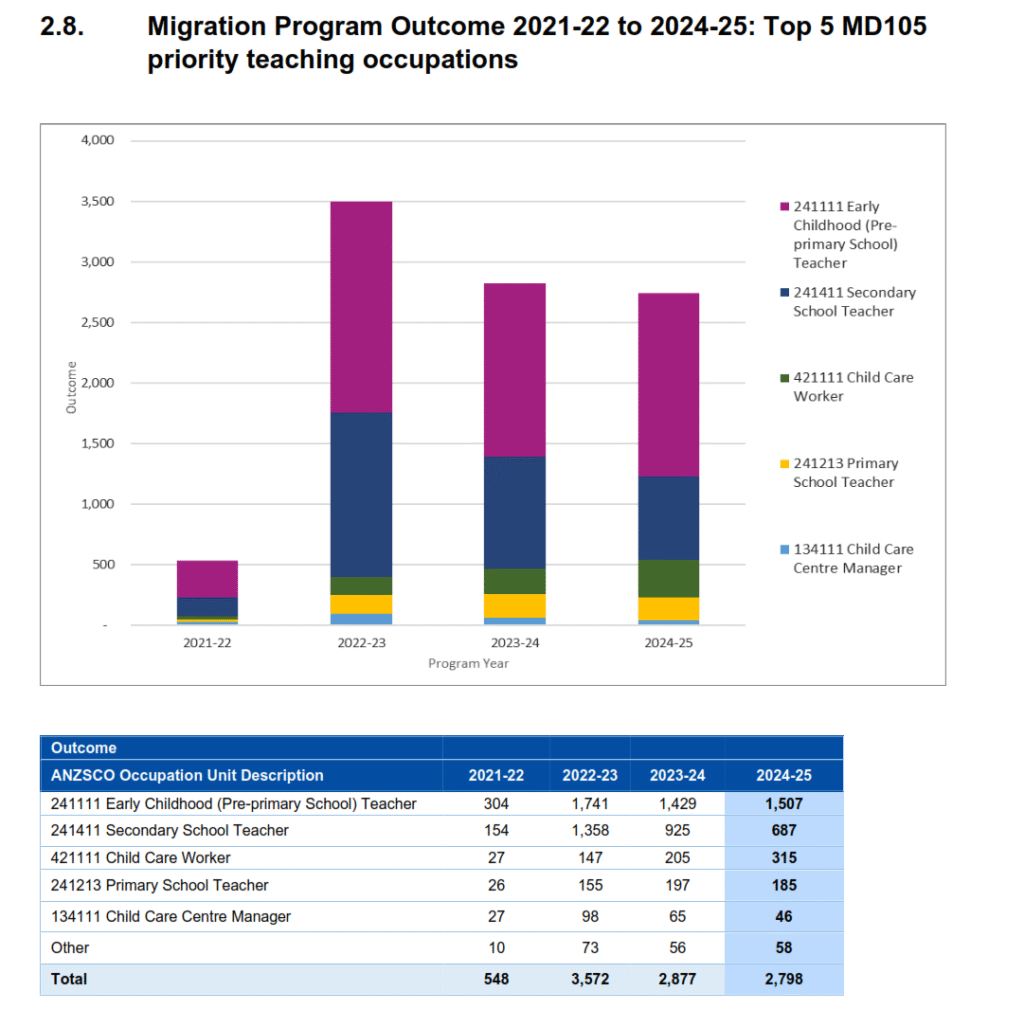
- Nursing: approximately 1,600
- Early Childhood Education: over 1,500
However, it is important to note that the overall scale of health-related occupations remains significantly larger than education-related occupations.
IV. Subclass 186 Employer Sponsorship: High Grants, Sharp Growth in Backlog
186 Top ten occupations under subclass 186 (primary applicants):
- Registered Nurse
- Chef
- Software Engineer
前三均 破千
All three exceeded 1,000 grants.The number of subclass 186 grants in 2024–25 for these occupations will directly influence the invitation strategy for subclass 189 in the next financial year.
Top ten occupations under subclass 186 (primary applicants):Backlog situation:
- 186 TRT + DE applications lodged: over 65,000
- As at 30 June 2025:
- Backlog exceeded 58,000
- An increase of approximately 20,000 year-on-year (+50%) 万(+50%)
这是去年雇担放宽后最直接的结果。
V. Backlog Changes in Other Skilled Visa Categories Subclass 189:
- 189:
- Combined primary and secondary applicant backlog below 7,000
- Next invitation round expected in February
- 491 / 494:
- Combined quota of 33,000
- 491 backlog reduced by over 7,000+
- 190:
- Backlog reduced to below 35,000
- Overall:190 + 491 combined backlog at financial year-end: approximately 66,000
- New applications this financial year: over 10,000
This explains why many states have begun restricting invitations and slowing invitation rounds during this financial year.
VI. Business & High-End Talent Visas
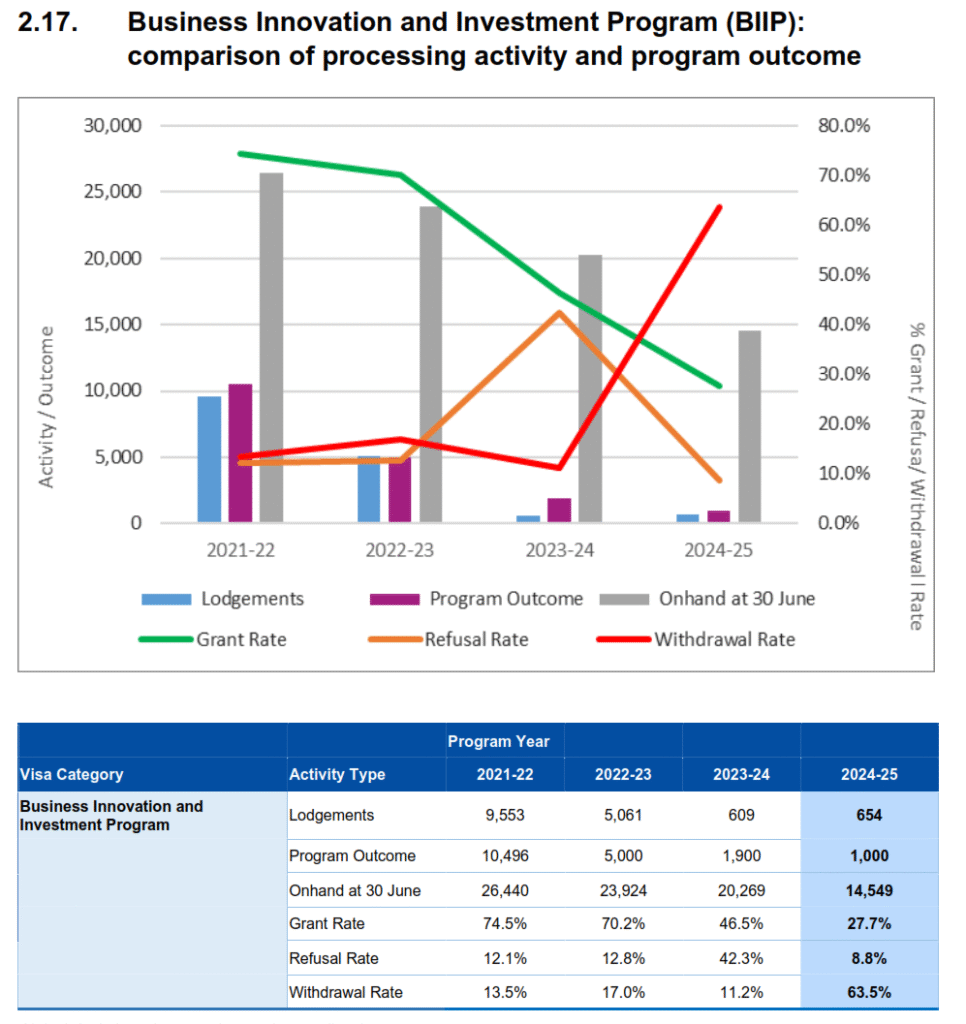
- 188 商业移民:
- 每财年 1,000 配额
- 24–25 全部用完
- 积压减少近 5,000
- 撤签率 高于下签率
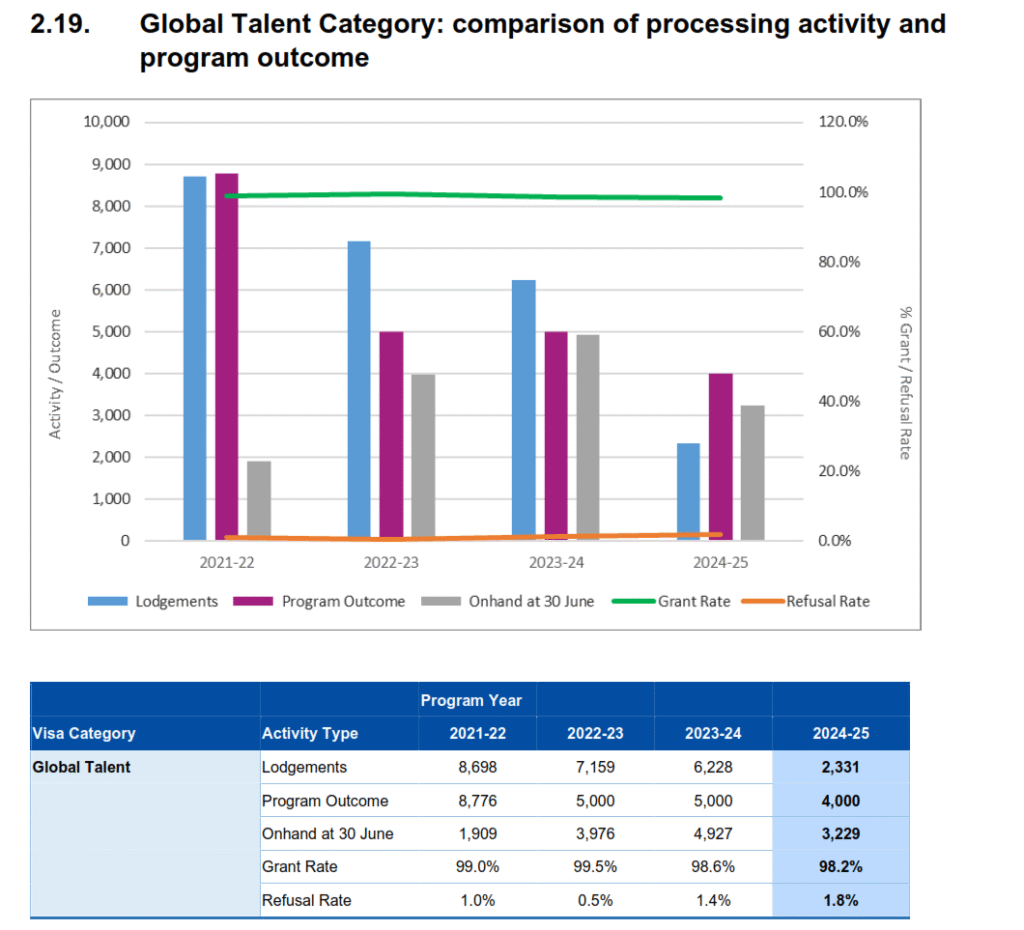
- 858(原 GTI):
- DigiTech:43.7%
- 金融服务:20%
- 健康产业:10%+
Note: These figures reflect former GTI data, not the new NIV.
VII. Family Migration: Quotas Used Up, Pressure Continues to Rise
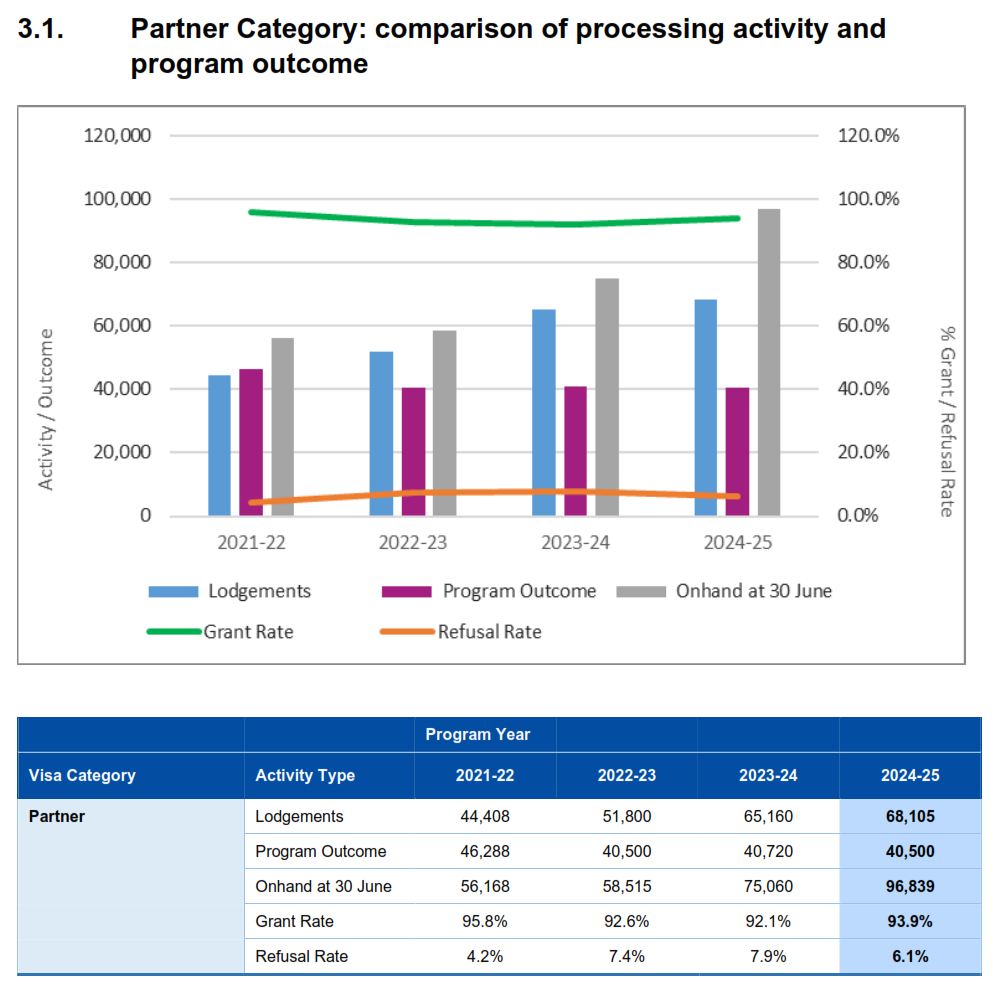
- Partner visas:
- Backlog approaching 100,000
- No significant increase in new applications
- 2024–25 quota fully utilised
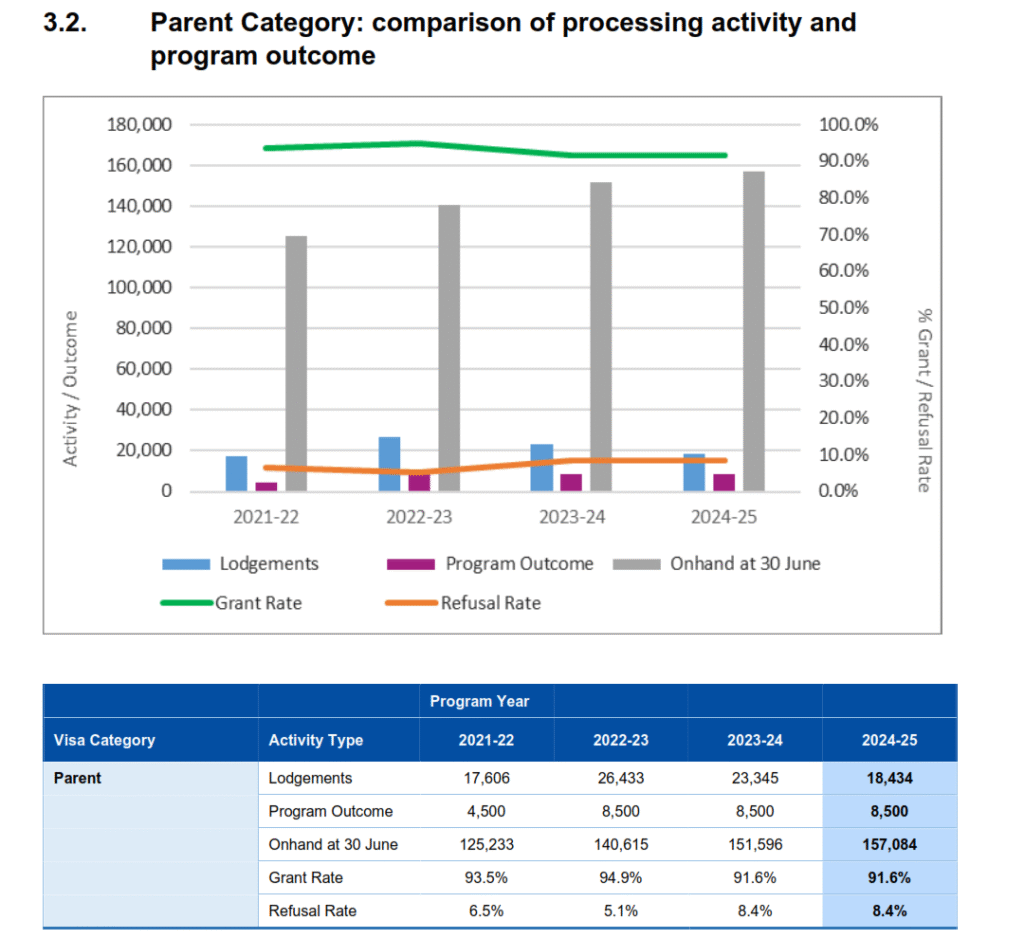
- Parent migration:
- New applications declined
- Backlog remains high at 160,000
- Subclass 143 current waiting time 14+ years
- Document request processing speed has recently improved
Practical advice: After obtaining PR, submit a parent visa application as early as possible—even starting with subclass 103—to secure a place in the queue.
One-Sentence Summary
The 2024–25 financial year was not a “loosening year”, but a year of “structural divergence”.
- 技术移民更集中
- Skilled migration has become more concentrated.Employer-sponsored backlogs have increased significantly
- Long-term pressure in family migration remains
Success increasingly depends on whether you are positioned in the pathway that truly fits your profile.