




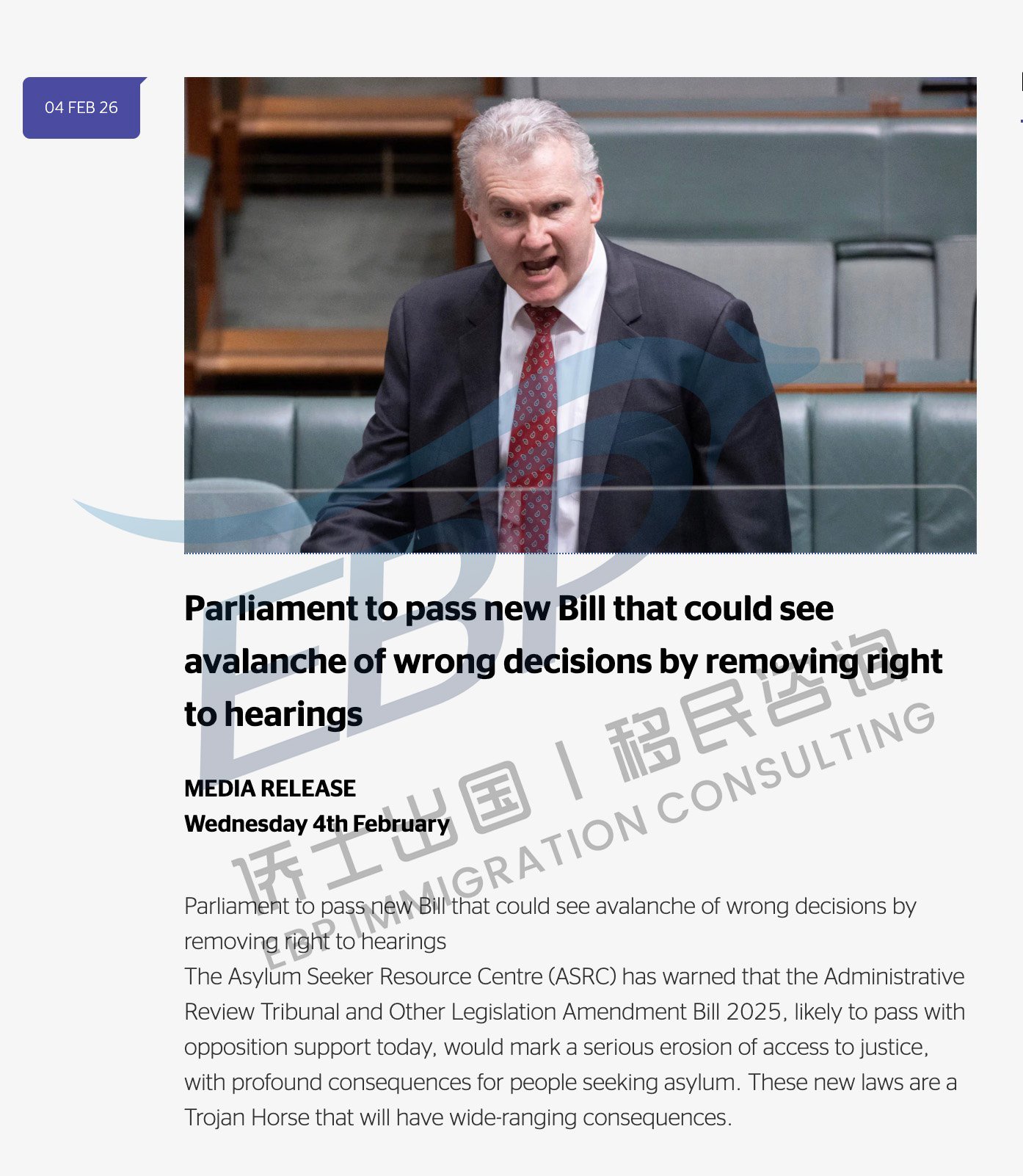
Recently, many applicants have found that following procedural changes to the Administrative Review Tribunal (ART), the window to secure a longer “transition stay” through appeals has narrowed significantly. For those who previously relied on the processing period to extend their lawful stay, overall strategies have become far more complex.
1. Why Is It Harder to “Buy Time”?
In past practice:
- After certain visa refusals, lodging an ART appealallowed applicants to hold a bridging visa and remain lawfully in Australia for an extended period while waiting for a hearing or scheduling.
- But with changes to hearing arrangements and processes:
但随着听证安排和流程变化:
- Processing timelines may be accelerated
- The waiting period granted is significantly shorter
- Case-by-case variations are greater, with increased uncertainty
In short, relying solely on appeals to “buy time” is no longer a stable or predictable pathway.
2. More Realistic Approach Now: Plan “Alternative Visa Pathways” in Advance
If your goal is to extend lawful stay while maintaining flexibility for future visa planning, you generally need to explore new visa categories in parallel, rather than depending only on appeals.
1. 4071) Subclass 407 Training Visa
Suitable for:
- Those with a genuine training plan
- IELTS 4.5 or equivalent
Advantages:
- Longer processing times, allowing lawful stay in Australia on a bridging visa
- Legally compliant structure
- Provides a pathway for future career or employer-sponsored transitions
2. 2) Tourist Visa
Suitable for:
- Short-term stay (approx. one month)
Advantages:
- Simple and low-cost application
- No English language requirement
3. 482Subclass 186 Employer Nomination Scheme (ENS) Visa!
Suitable for:
- Those with relevant work experience
- Occupation matches market demand
- Able to secure an eligible sponsoring employer
Features:
- Lawful work rights
- Family members can accompany
- Some occupations can lead to permanent residence
If conditions are met, the 482 visa is often more stable than maintaining a bridging visa status alone.
3. A Realistic Assessment: It Depends on “How Long You Want to Stay”
Strategy design should first clarify your objective:
- Short-term transition (1–2 months) – not recommended
- Medium-term lawful stay (1–2 years)
- Long-term visa / permanent residence planning
Different goals require entirely different solutions:
- Relying only on ART appeals: high uncertainty
- Switching to training or employer-sponsored visas: greater control and certainty
4. Important Warning
Any “buy time” strategy without a genuine purpose or supporting documentation may result in:
- Visa refusal
- Negative impact on future visa applications
- Increased risks to your immigration record
Therefore, the recommended approach now is to base your stay on genuine study or genuine work pathways, rather than simply prolonging processing periods.