




Regarding the news that “dependants will no longer be able to join 485 visa holders in the future”, it is critical to separate the reforms announced by the Minister from the existing application rules. On 17 September, Tony Burke confirmed in his speech that the government proposes to restrict new dependant additions for student and graduate visas. He also stated that families whose dependants have already been included as secondary applicants and are already in Australia will not be split up. However, this statement should not be broadly interpreted to mean that any new partner added later is automatically protected simply because the primary applicant is already in Australia. Three categories merit close attention under the announced changes.
The first category covers families where dependants are already listed as secondary applicants and residing in Australia.
The Minister indicated an intention to retain existing arrangements, yet formal transitional provisions are required to define the cut-off date, treatment for those departing Australia, and how arrangements carry over when switching to a subsequent visa. Couples who are married but with the spouse still overseas do not automatically fall into this category.
The second category includes applicants under special arrangements for Pacific and ASEAN nations.。
In an ABC interview on the same day, the Minister reaffirmed that certain dependant provisions will be retained for these regions. The exact list of countries, eligibility criteria, and applicability across different visa subclasses still await formal rules. Exemption cannot be guaranteed based solely on nationality.
The third category relates to applicants undertaking specific courses such as doctoral degrees.。
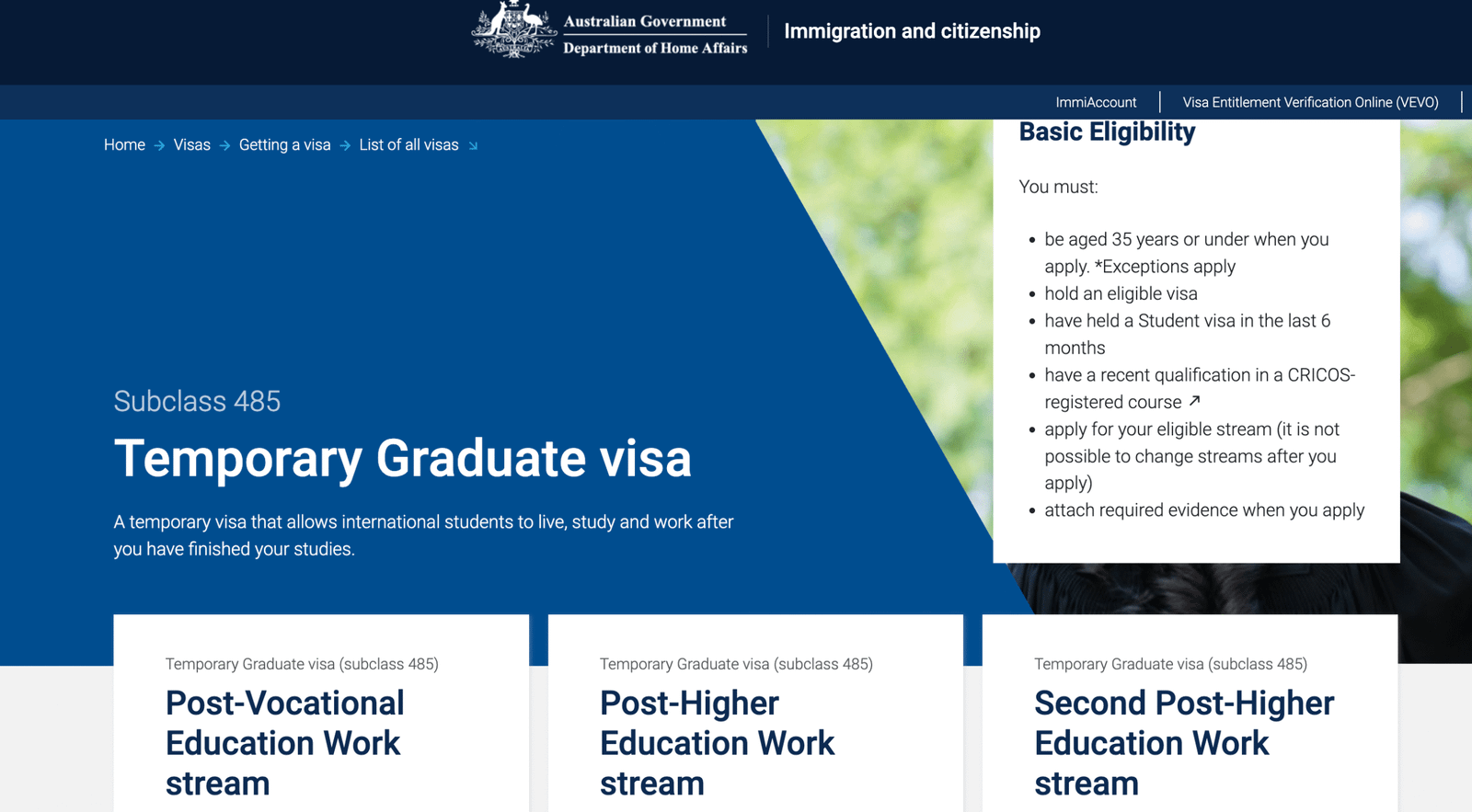
The Minister explicitly cited PhD programs as an example where dependant arrangements will remain available, but the full list of eligible courses has not been released in these remarks. Therefore, this cannot be extended to all master’s programs, nor can we assume automatic exemption for all PhD graduates applying for a 485 visa. For applicants currently preparing their submissions, the application methods published by the Department of Home Affairs still apply for now. As at 21 September, the Home Affairs webpage for the 485 Higher Education Graduate stream still states that eligible family members may apply together or be added at a later stage: people who are in Australia and meet family member criteria at the time of primary application lodgement can apply concurrently. Where a primary application has been lodged but not yet determined, the official website permits adding children at this stage, though no other family members may be added. Once the primary visa is granted, eligible dependants may lodge a Subsequent Entrant application, either onshore or offshore.
These are the pathways currently listed on the official website. They do not constitute a guarantee that all will remain available after the reforms take effect. Each individual case will need to be assessed against the commencing legislation, place of application, existing visa conditions, plus relationship, health and character requirements. For anyone with plans to bring family members, now is the time to organise your family profile: the stage of the primary application, where dependants are located, when the relationship was established, whether it has already been declared, and the expiry date of current visas. This information directly impacts subsequent assessments. A marriage certificate alone, or lodging an application before a certain date, does not inherently guarantee protection under transitional policy.
Comment