




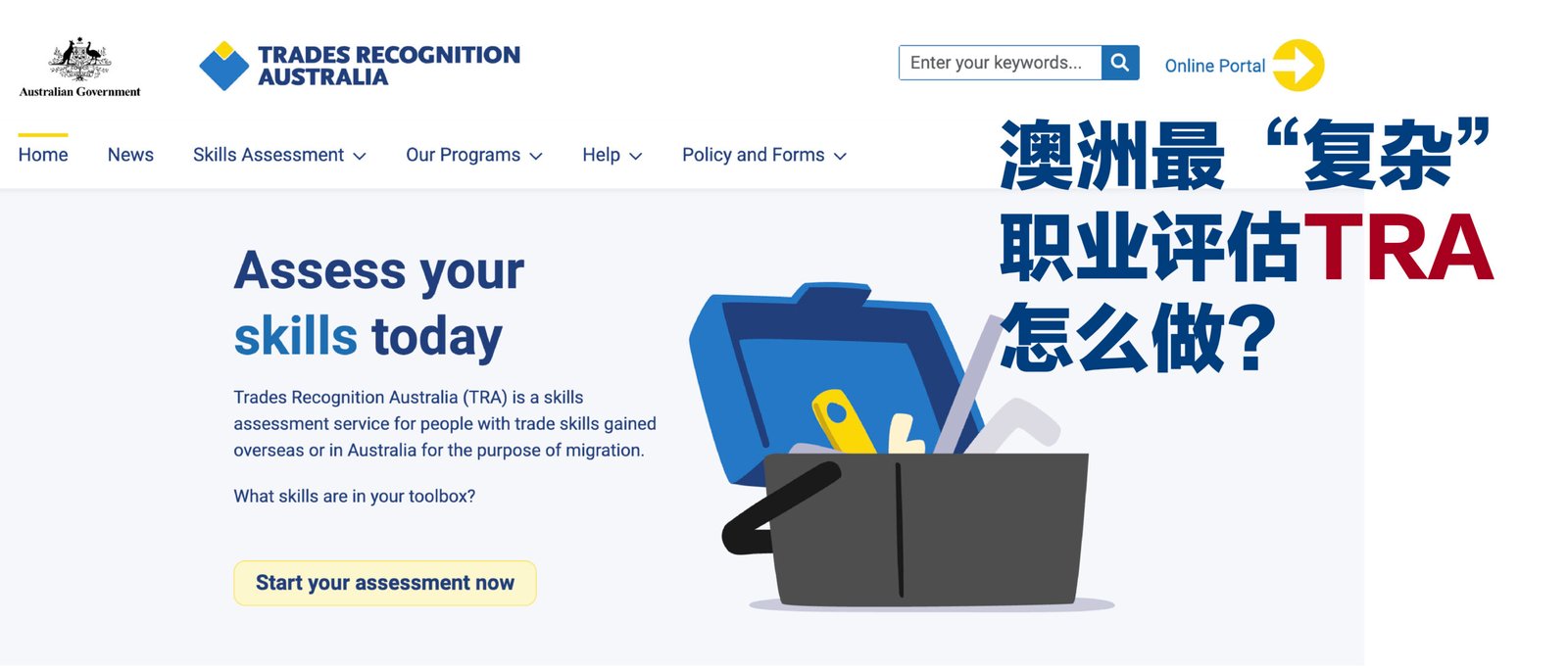
For trade occupations including Chef, Pastry Cook, Baker, Motor Mechanic, Carpenter, Welder and Hairdresser, Trades Recognition Australia (TRA) is one of the most common assessing authorities for migration skills assessments. Many applicants come to us with recurring questions:“Can I get a skills assessment without formal qualifications?” “Will I automatically pass once I graduate from an Australian trade course?” “I’ve worked as a chef in China for years — do I need to retrain in Australia?” In reality, TRA operates entirely distinct assessment pathways based on an applicant’s educational background and work history.
Category 1: Applicants with Relevant Australian Trade Qualifications
If you have completed an Australian vocational trade course such as Certificate III, Certificate IV or Diploma in your nominated occupation, you will complete your skills assessment via the Job Ready Program (JRP).
The JRP consists of four sequential stages:
Stage 1: Provisional Skills Assessment (PSA)Submit your application for a provisional assessment upon completing your accredited trade course. Mandatory documents include:
- Qualification certificate
- Academic transcript
- Course completion letter
A successful PSA satisfies the skills assessment requirement for a 485 Temporary Graduate Visa application.
Stage 2: Job Ready Employment (JRE)After securing PSA approval, you must register eligible relevant employment with TRA before your work hours can count towards the full assessment. Required supporting materials:
- Employer confirmation letter
- Payslips
- Formal employment contract
- Work log records
Important note: Your employment experience only accumulates for assessment purposes once formally registered and recognised by TRA.
Stage 3: Job Ready Workplace Assessment (JRWA) Once you have accrued the required minimum working hours, TRA will arrange an on-site workplace assessment, which typically includes:
- Technical competency interview
- Role-specific practical questioning
- Site inspection of your daily work environment
This stage is generally straightforward for applicants already working in their trade field.
Stage 4: Job Ready Final Assessment (JRFA) After fulfilling all required work hour thresholds and passing all preceding assessment stages, you may lodge an application for the final full skills assessment. A positive full assessment outcome can be used to apply for skilled migration visas or certain employer-sponsored visas. While the JRP involves multiple procedural steps for Australian graduates, its biggest advantage is allowing you to accumulate qualifying work experience while employed full-time.
Category 2: Overseas Applicants or Those Without Australian Trade Qualifications
A common misconception is that applicants without Australian qualifications cannot obtain a TRA skills assessment — this is incorrect. Offshore candidates or individuals with extensive industry experience but no local vocational training may apply through TRA’s offshore assessment streams, most notably the Offshore Skills Assessment Program (OSAP). Unlike the JRP, offshore pathways focus primarily on verifiable professional experience and hands-on trade competency, rather than Australian academic credentials. Standard supporting documentation required:
- Official employment verification letters
- Payroll records
- Tax records
- Social insurance records (where applicable)
- Detailed employer reference statements
- Comprehensive breakdown of core job duties
Depending on your nominated trade, you will also be required to complete one or more of the following evaluation components:
- Technical competency interview
- Virtual video assessment
- In-person practical trade evaluation
For roles such as Chefs, Pastry Cooks and Motor Mechanics, assessors will thoroughly verify whether your practical skills align with Australian industry standards. Applications with a minimum of 3–5 years of continuous full-time relevant trade experience carry significantly higher approval chances.
Is a Formal Qualification Mandatory for a TRA Assessment?
Short answer: No, it is possible to secure a positive outcome without formal qualifications. Many skilled tradespeople lack certified vocational training yet possess years of hands-on industry experience. For these applicants, verifiable work history carries greater weight than academic credentials. As long as you can fully substantiate your genuine employment background and pass the competency evaluation, you can obtain a valid TRA skills assessment. This pathway remains a primary route to Australian employer sponsorship for overseas chefs, pastry cooks, motor mechanics, carpenters and other trade professionals.
Which Pathway Suits Your Circumstances?
Australian trade graduates → Job Ready Program (JRP). Applicants residing overseas → OSAP or alternative offshore assessment streams. No relevant formal qualifications but lengthy trade experience → Eligible for offshore experience-based assessment. Assessment prerequisites vary widely by occupation, country of residence and length of professional experience. We recommend booking a professional pre-assessment consultation prior to lodging your application to confirm the most suitable skills assessment and migration pathway for your profile.